



Centennial Reflections
The National Park Service turns 100 on August 25, 2016, and the Sleeping Bear National Lakeshore will be celebrating the Centennial under the new leadership of superintendent, Scott Tucker. A landmark year for the NPS, but 2016 will only mark 46 years since congress authorized the Sleeping Bear Dunes.
Here’s a little history you might not know about the creation Lakeshore (Hint: It didn’t start out that easy.) along with a look back on how The Homestead came to be established smack dab in the middle of “The Most Beautiful Place in America.”
An Uneasy Beginning
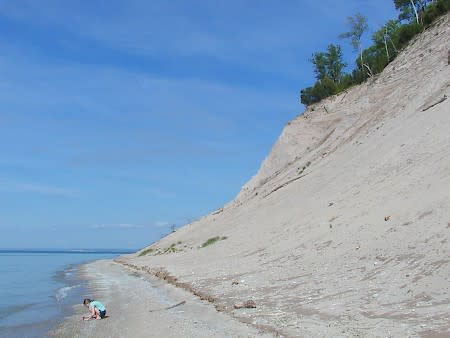
[source: wikipedia.com]
When Scott Tucker moved to Michigan in June to begin his assignment as the new superintendent of the Sleeping Bear Dunes (you can read more about Tucker’s appointment by clicking here), he became the latest in a line of Lakeshore leaders that started with Julius Martinek in 1970.
Hard to imagine now, but not everyone was thrilled about the announcement—namely the locals. Given an initial budget of around $20 million to secure the more than 1,400 private tracts then located inside what is now the Lakeshore’s borders, Martinek spent more than half of the next decade overseeing hundreds of land acquisition deals with a local landowners, many of whom saw the park service’s work as a government takeover of sorts. The Sleeping Bear Dunes was a popular shipping stop and tourist destination since before the turn of the century. Many of the people who lived here had deep ties to the land and took a hostile view of government offers they considered a “take-it-or-leave-it” deal. According to Lakeshore history (click here for the whole story), “by July 1974, the agency had acquired only 639 tracts of the more than 1,400 needed to complete land acquisition.”
The creation of Sleeping Bear Dunes may have authorized by congress in 1970, but another little known fact is that the official dedication of Lakeshore didn’t happen until 1977. Again, the official park history reads:
“By the spring of 1977 lakeshore land buyers had managed to secure the bulk of the small private land holdings within the park. Closings had been made on 27,000 acres of land. These acquisitions and the transfer of state holdings brought the total of lakeshore lands to more than half of the 70,000 acres mandated by Congress. This threshold marked a major turning point in the lakeshore’s history.”
Meanwhile, At The Homestead
Originally established as a Christian Science camp for boys in the 1920s, the 225-acre Glen Arbor resort property that would eventually be known as The Homestead was purchased by Robert Kuras in 1975.
The camp remained in operation until the 1940s, but was largely undeveloped. An interesting story, prior to Kuras entering the picture, is that the ABC broadcasting company became interested in the land as a home base for its then popular wildly popular sports program—Wide World of Sports. ABC had tossed around the idea of turning the land into a real estate project under the umbrella of Wide World of Sports, with televised golf, tennis and aquatic events. But the plan never panned out.
Kuras did years of research prior to purchasing the resort and noticed that—despite the fact that Michigan has more miles of coastline that California—no other major area resort in the area focused on the water. No other place around could offer four-season recreation opportunities like skiing, golf, tennis, boating, etc. all in one locale. And that’s still true today. While park service personnel were busy conservatively building Sleeping Bear into the naturally scenic treasure it is today, Kuras began his own work building a place that fit seamlessly into the natural environment—a resort that conserved the natural beauty of the coastal landscape while also providing activities every member of the family would enjoy.
The rest, as they say, is history.